Wednesday, January 22, 2014

Friday, January 24, 2014


Announcements and Reminders: 
On February 3, we will take the Post-Test on Writing Paragraphs.  
    Be prepared to 
          --  Deconstruct the prompt  
              Remember RAFT: Role, Audience, Format, Task (verbs), Strong Key Words
                  Note: For most school-type audiences, you will avoid abbreviations, slang, dead words                               such as "Well, . . . ", and you will avoid or limit contractions. 
         --Write a complete paragraph with central idea sentence, evidence/supporting details,  and a                         concluding sentence. 
         -- Stay focused on your central idea and cut out any ideas that do not support it.
         -- Use transition words and phrases.
         --  Revise.
         -- Edit.


Today’s Agenda: 
1. Circle the Transition Words on the Lyrics to a Rap about the history of video games.
 Listen to the Rap!  Using transitions:  http://www.flocabulary.com/transitions/

2. Computer lab to Practice with a Practice Test for the End of Year SAGE Testing (about 20 minutes) Follow the directions here  Practice Tests for End of Year Testing  or on the handout.

3. Computer lab to Work on your January Book Assessment (About 30 minutes)
(Due January 30, but we will not have another computer lab time before then.)
Take your original assignment and the new grading sheet -- both are here: JANUARY BOOK OF THE MONTH PROJECT H.doc

4. Computer lab to play games with Transition Words and Phrases  (About 10 minutes)

Play this game:  http://teacher.scholastic.com/activities/writing/persuasiveflash/transitionalwords.htm


Open two tabs, one to http://www.studygs.net/wrtstr6.htm, and the other to http://www.studygs.net/trans/wrtstr6a.htm. Play the game to place the transitions in the correct categories.

If you still have extra time --
Try this game about prefixes and suffixes:  http://teacher.scholastic.com/activities/adventure/grammar3.htm#


If you were absent:  See above. 

  • Complete your January Book Assessment on your own time.  See the tab above for Required Reading.  Pick up the grading sheet. 
  • Practice Tests for End of Year Testing  You can do this from home. Ask for the worksheet. 
  • Play the games about transitions.  


B8 Argument Chart


Basic Argument
Evidence
Rule


Arthur is lying on his back.


Arthur is still holding onto the glass.


The glass in Arthur's hand is unbroken.


The rug on the stairs is perfectly straight.


As a rule, if a person falls while walking down the stairs, he or she will land face down.


As a rule, when a person is walking down the stairs holding something, he or she would drop the object and try to save himself or herself.


As a rule, if there is a rug on the stairs and a person falls down the stairs, the rug will be crumbled and perhaps ripped.  


B7 Argument Chart


Basic Argument
Evidence
Rule


Arthur is holding a glass in his hand.


The glass is not broken.


Arthur is lying face-up.


Arthur's right hand is on the same side as the stair rail.


Nothing observable except the rug to trip on-- but there may be something higher on the stairs.


The glass looks empty.
It could have spilled on the stairs. 


Usually if a person is falling, he or she tries to stop it with both hands.  He or she would drop something being held.


As a rule, when a glass falls to the floor, it breaks.


As a rule,


A person upstairs would probably be coming down the stairs to get a drink rather than going up. 


B6 Argument Chart


Basic Argument
Evidence
Rule


He has a glass in his hand.
Why is the glass still in his hand?
Why isn't it broken?


Arthur is lying on his back.


His feet are on the stairs and angled.

Arthur is dressed formally.

Arthur is wearing smoking jacket.  (robe) 


There is carpet on the stairs.   

The things on the wall are all in place.


Queenie is just standing there. 


(He was drunk.)
(He died from a wound on his head.)


The stove on.


As a rule, when people fall down stairs they try to catch themselves, not hold onto something.

As a rule, when someone falls with a glass in their hand, it would most likely break.


As a rule, when a person falls down the stairs, he or she could land face down.


As a general rule, when people fall, they grab at whatever is nearby to stop their fall.


(As a rule, when someone falls and is hurt, you usually go to help them or run to get help.???????)


B5 Argument Chart


Basic Argument
Evidence
Rule
Conclusion = Claim
There is a glass in Arthur's hand.


Arthur's feet are pointing up the stairs.
He is lying on his back.


Arthur's clothing is not disheveled. (messed up)

The carpet on the stairs is  not messed up.


The stove is on.


As a rule, when someone falls downstairs with a glass, the glass would break.

As a rule, when someone falls, they drop whatever they're holding and try to catch themselves.


As a rule, when a person is coming down the stairs and trips, he or she would either fall forward and land facedown, or fall backward onto the stairs (probably with their feet still on the stairs).


When people fall, they try to catch themselves on anything they can grab.

Candle flames would go out because of the air movement.

Queenie is lying.


Queenie is lying.


Monday, January 20, 2014

Why We Sometimes Really Need Commas with Adjectives!

From a very cool writer/editor named Joshua Grant at  http://radicalrevisions.wordpress.com/category/articles/informative/grammar-informative/
Why We Sometimes Really Need Commas with Adjectives!

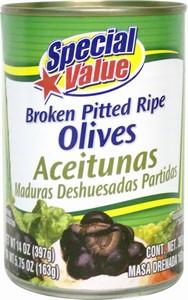
On Sundays, Maya Sciarretta, a really-very-cool lady uses the back kitchen at my weekend job to make huge batches of tomato sauce. When there’s extra, we get some, and it’s the best. The other day, she was making a batch of her puttanesca. I took this photo of the olives she’d bought from food supplier Italissima.


          Now with 400% more crunch!
These are “Broken Pitted Ripe Olives.” I stopped in my tracks, my heart pumping slightly faster than its usual rate. I felt like a mid-size jungle cat catching the scent of possible prey.
“Maya,” says I, “are these cans full of broken pits? Like, horrible little shards that will rip up the insides of our mouths and break our teeth?”
She assured me that no, there were no pit shards. The olives were broken, the olives were pitted, and the olives were ripe. But without commas, “broken pitted” becomes ambiguous: is it the pits that are broken, or is it the olives? (And with “broken” and “pitted” on the same line, I imagine that this reading would suggest itself to non-editors, too.) I could imagine that extra olives full of pit shards would be scraped off whatever production line and marketed at a cheap price to thrifty, patient saucemakers willing to strain their product.
The problem arises from “broken” seeming to modify pitted—making it a cumulative adjective, which would not take a comma—rather than olives. However, the can doesn’t include a comma after “pitted” either, so it seems as if whoever named these olives chose not to/did not know how to apply the rule at all.
Of course this could easily be cleared up by a comma after broken and one after pitted to designate the adjectives as coordinate—that is to say, modifying only “olives” and not the other adjectives. I can imagine, however, that Italissima may have decided that commas had no place in the name of a food product. If they were dead-set on not including commas, and didn’t care about giving grammarians headaches, they could have, at LEAST, arranged the adjectives so as to cause the least amount of confusion: “pitted ripe broken olives,” while technically incorrect, is unambiguous.
There’s a simple trick (for native speakers, at least) to test whether an adjective is coordinate, and thus in need of a comma. Try slotting an “and” between a pair of adjectives. If it slips in without changing the meaning (“broken and pitted,” changes the meaning of “broken pitted”) or making things sound awkward (like “large and blue house”), then it’s coordinate. If not, it’s cumulative. The adjectives in “large blue house” are cumulative. The adjectives in “rhythmic grammar advice” are cumulative. The adjectives in “broken, pitted olives” are coordinate (in this case).
F.Y.I  Here is a huge, gigantic, overwhelming, helpful list of adjectives: http://www.momswhothink.com/reading/list-of-adjectives.html#Adjectives List

Attacking a Prompt (from MY Access) -- Ms. Dorsey's Answer Key

Ms. Dorsey put together this answer key with lots of help from her English 7 students.

Attacking a Prompt – Determining what is being asked of you, as a writer.
Carefully read the following MY Access! prompts. Using your “RAFTS” chart, establish what the prompt is asking you to do

1.     Each person has been in trouble, at one time or another, because he or she did something bad or said something wrong. Write a multi-paragraph essay describing an instance when you did something you later regretted and the lesson you learned in the process.


Role:  myself
Audience: teacher,  (the computer on MyAccess), perhaps the other students in my class
Format: essay (multi-paragraph)
Task:  write, describe 
Strong Key Words:  trouble, something bad or something wrong, regretted, lesson learned


2.     Most people have argued that the skills needed to be successful in today’s workforce have changed. What skills do you feel an individual needs to be successful in a job today? Why do you feel these skills are most important?
In an essay to be read by your teacher, identify the skills you feel are most needed by an individual to be successful at work and provide reasons to persuade your teacher that these are the most critical skills for success.


Role:  myself, student
Audience:   my teacher
Format:  essay
Task:   identify, provide, persuade
Strong Key Words:  skills, successful, today's workforce, individual, why important skills


3.     In the aftermath of several widely reported incidents of school violence across the nation, many parents, teachers, and students are examining the problem of school bullying. To avoid potential tragedies, your school board is considering implementing a policy to address the incidence of bullying.
Write a letter to your local school board in which you discuss the need for a policy to prevent bullying in your school and suggest what steps this policy should take to prevent bullying from occurring.

Role:  myself, student
Audience:  local school board
Format:  letter
Task:  write, discuss, suggest 
Strong Key Words:  violence, problem, school bullying,  policy to prevent, steps to prevent bullying


4.       Upon graduating from high school, it is important for students to think about their plans for the future, whether they include additional schooling, joining the workforce, or some other activity.
Think about what you would like your career to be after you graduate from high school. In a well-developed essay, state your career goals for the next five years and explain your plans to achieve these goals.

Role:  student, myself
Audience:  teacher, other students?
Format: essay 
Task:  think, state, explain
Strong Key Words:  plans, career, after graduate from high school, career goals, plans to achieve goals 


5.     Picture yourself living in the year 2050. Power sources operating in your house have changed. Describe the new power sources used to make your home run more efficiently. Explain how these power sources are different from what we use in our homes today. Write about the benefits and disadvantages of this new technology and how it will affect future generations.


Role:  myself in 2050 
Audience:  teacher, other students, those who make the choices and who would be affected
Format:  paragraph?  essay?  
Task:  picture,  describe, explain, write
Strong Key Words:  2050,  power sources, house/home, change, efficient, different,  benefits, disadvantages, affect future generations


6.     Characters respond to challenges differently based upon the circumstances and their own personal motivations, strengths, and weaknesses. Consider two different characters from a story (or stories) you have read. What challenges did these characters face? How did they respond to these challenges?
In a well-developed essay, compare and contrast how these two characters responded to the challenges they faced. Make sure to include specific details and examples from the text(s) to support your interpretation.


Role:  myself/student
Audience: teacher, computer progream, maybe classmates
Format:  essay
Task:  consider,  compare, contrast, include, support 
Strong Key Words:  characters respond challenges differently,  circumstances, motivations, strengths, weaknesses,   TWO characters, specific details, examples from texts, my interpretation 


7  After studying Alfred Noyes’ poem, “The Highwayman,” write an essay in which you analyze the author’s message. Focus your writing on several clear images from the poem and be sure to discuss how the characters’ actions and the poet’s language reveal the author’s message.


Role: myself, a student
Audience: teacher, classmates? 
Format:  essay
Task:  study, write, analyze, focus, discuss, 
Strong Key Words:  poem The Highwayman, author's message, clear images,  character's actions, poet's language