Wednesday, November 3, 2010

November 8, 2010

Bell-Ringer: Paragraph Packet  -- Complete pages 4, 5, 6, and 7.  Notice that pages 6 and 7 go together.  Page 7 is the sentence bank mentioned in the directions on page 6.  Perfect Paragraph Packet.pdf


Reading Minutes:
A1 -- none
A2 -- none
A3 -- The Candy Shop War by Brandon Mull
A4 -- none

Spelling: 
A3 receives copies of -able, -ible assignment.
All students: Study your spelling a little every day.
    If you are absent, or lose your handout, see this blog for the spelling assignment.  For this week you can find it here: -able/-ible for spelling test

Legibility/correct formation of letters counts! Capitalize only letters that should be capitalized. 


audible -- as in audio, auditorium,  audition
visible -- as in vision, video

Extra credit:  According to word parts, what does portable mean?  Look it up.
You could try  http://dictionary.reference.com/browse/portable 
See the entry from the World English Dictionary.


More of the History of Our Language.
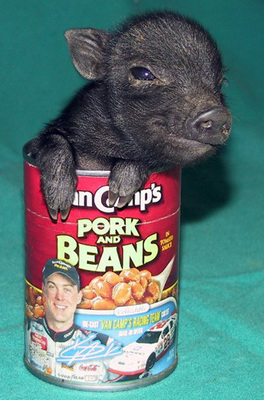
Can you tell why we use the words "pig" and "pork" as we do?

History of the English Language PowerPoint 

Cloze Notes for History of the English Language PowerPoint

And the Spanish Language, too! 


Reminders:
If you don't have the packet, you need to get one, and catch up on pages 1, 2, and 3.
Perfect Paragraph Packet.pdf

Extra Credit: What does semordnilap  mean?  See the nswer below.  Be the first to tell me for 5 points extra credit.
Semordnilap is a word or phrase that spells a different word or phrase backwards, as in this pair: Dennis –> sinned. "Semordnilap" is a 20th Century coined word which is "palindromes" spelled backwards. Among the longest single-word English examples: stressed –> desserts.

November 4, 2010

1.  Bell-Ringer:  Finish your paragraph comparing the book and movie of The Outsiders, if needed.  Revise and edit. Check to make sure you have all the parts of the hamburger there.

Receive packet for  "The Perfect Paragraph."  Perfect Paragraph Packet.pdf
Write your name and period on the front of the paragraph packet you receive.
Then
   a. Carefully read page 1 about creating paragraphs.
   b. Complete pages 2 and 3.   Creating outlines for paragraphs.

2.  Spelling test on bi- and words using this prefix -- with meanings.
        Receive handout for -able, -ible words.

3. Reading Minute:
A1: Once Upon a Marigold -- Jean Ferris
A2: Rascal --  Sterling North
A3:  Tennis Shoes Among the Nephites  -- Chris Heimerdinger
A4:  Confetti Girl -- Diana Lopez

4.   Watch the PowerPoint and fill in "cloze" notes about the history of our language.

History of the English Language PowerPoint 

Cloze Notes for History of the English Language PowerPoint

A1  to the Vocabulary Sources

A2 to the Vocabulary Sources

A3 to the Vocabulary Sources

A4 to "pig and pork"

______________________________

Your word part for next time includes two suffixes that mean the same thing:

Suffix
Meaning
Examples
-able
capable of   (adjective)
capable, agreeable, expandable, remarkable
-ible
edible, visible, audible, legible, tangible

See this post for more information on the test:

-able/-ible for spelling test

_____________________________________________

extra credit:
Be the first to tell me how we got the word "television, including what languages the word parts come from, and get 6 extra credit points. See below:
John Baird coined the word TELEVISION by uniting the Greek word tele (“distant” or “far”) with the Latin word vision (“to see”). Had the word been all Greek or all Latin, we might be complaining that there’s nothing to watch on the teleopsis or the proculvision.

-able/-ible for spelling test


Remember that there are no retakes on these tests.

                               Vocabulary/Spelling #2              Test on  November 18
 Suffixes to study:   -able  and -ible which both mean capable of
                                                                          and are used to create adjectives.
Words to learn for the spelling test:
1. agreeable                                    3. edible
2. expandable                                 4. visible
                                                         5. audible                       
                                   
You are responsible for learning the suffix and the spelling words.
Here is an effective method for studying your spelling words:           
1. Read the first word: look at it and say it.
2. Spell the word to yourself: touch each letter with your pencil and say the letter softly aloud to yourself.
3.  Close your eyes.  See the word in your mind.  Say each of the individual letters softly aloud to yourself.
4. Now, put your memory muscle to work.  Carefully print the word in the next three columns, and say each of the individual letters to yourself as you write it.
5.  Take a break of four or five minutes to give your long-term memory time to process the look of the word, its letters, and their order.  Leave behind your spelling and do something else for those minutes: read, do other homework, watch TV, listen to the radio.
6.  Then cover the correct spelling with your hand and print the word in the "Spell" column.
7.  Proofread: check the word you just wrote letter for letter against the original, using the tip of your pencil.
8.  If you spelled the word correctly, put a star in the final column and go on to the next word on the word study sheet.  If you misspelled it, repeat the process above, steps 1-6, this time printing the word in the "Spell Again" column.
9.  Repeat the procedure with each remaining word.  Again, the study process for five words should take about twenty minutes. 
                                              *Do not capitalize these words.
Word
Write the Word
Write the Word
Write the Word
Spell
Spell Again
agreeable


expandable


edible


visible


audible


Extra Credit:  Be able to tell what part of speech each of these is.  Hints:  They are all the same part of speech.  What part of speech do  -able and –ible make?

edible means “capable of being eaten”  
visible means “capable of being seen”   (extra credit --  Related words include vision and video.)
audible means “capable of being heard”  (extra credit -- Related words include audience and audio.)

Tuesday, November 2, 2010

Can you dance Thriller?

I was a chaperone at the 7th/8th grade Halloween dance, and the kids didn't know the Thriller dance.  Just for fun, here's a clever tutorial that you might be able to access at home: http://www.youtube.com/watch?v=-6FTWlTRanc

Band Bash

Wow! What a great job our bands did!
Among my students I saw were
Kara
Karla
Chris
Crosbie
Nathan
Chase
Sean
Landon
Mitshell
Alicia
Nathan
Nathan
Summer
Chelsie
Shestin
Karli
Drew
And, guys, I'm up so far in the stands, and many of you had your backs to me, so I know there were many more of you.
Congratulations to all of you who participated!

Monday, November 1, 2010

Hamburger Paragraph


http://acephalous.typepad.com/acephalous/2009/05/how-to-structure-a-paragraph-with-a-hamburger.html

November 2, 2010

Bell-Ringer:  Study together for the spelling test on Thursday on the word part bi- and the spelling words and meanings that go with it.

Prefixes and Suffixes Chart 2010 

A3 and A4 played Sparkle to practice.

Hand in your white character chart for a character from The Outsiders, if you haven't yet.

Reading Minute:
A1: none --   Ms. Dorsey read Dogzilla to the class.
A2: The Lost Hero by Rick Riordan
A3: Everest by Gordon Corman
A4: Harry Potter - Sorcerer's Stone --J.K. Rowling

Finish the movie
A1 -- had already  finished the movie
A2  from  1:34:20 -- finished the movie
A3  from  scene 26 (motorcycle escort)  1:32:12 --  finished the movie
A4   from Ponyboy passes out after they see the police and Dally  1:40:35 -- finished the movie.

_________________________________________


Get together with your classmates to finish filling in your charts for comparing and contrasting the book with the movie. 


In your composition books --

Write a paragraph comparing and contrasting the movie of The Outsiders that we watched to the book.Either compare (tell about things that are the same), or contrast (tell about things that are different.) Don't bite off more than you can chew.  (Keep your topic small enough.)

Basics of writing a paragraph: 

1.  Make sure today's date is at the head of this entry.
2. Skip a line.  
3. Indent the next line and begin with your topic sentence.
4. Create another sentence that supports the topic sentence.
5. Create another sentence that supports the topic sentence.
6. Create another sentence that supports the topic sentence.
7. Add your closing/concluding sentence.  This sentence leaves the reader feeling that the piece has been wrapped up/finished. 


8. Now, go back to #2 and give your paragraph a title that tells the subject of the paragraph.
___________________________________________

Example: Contrast paragraph
Title: Halloween Then and Now

       Halloween is very different for my grandchildren than it was for me.Because their mom (my daughter) is a great bargain finder, they have many well-made costumes to choose from.  When I was their age, we'd go to the five and dime store,  and I'd pick out a cheap and uncomfortable plastic mask that came with a sort of stiff plastic tunic printed with a design suggesting that character.  Also, they have many near neighbors' homes where they can trick-or-treat.  On the other hand, my parents would have to drive me miles to get to the other far-flung farms where our neighbors lived. Their Halloween fantasies are enhanced by readily available DVD's and videos they can watch right in their home.  There were no such things when I was in school, and if you wanted to watch a scary show, you had to catch it at the time it was shown on one of your two or three TV channels. There was no way to record it and watch it while you warmed up after returning from collecting candy.  Though my grandchildren  have better costumes, closer neighbors, and more access to Halloween media, my childhood memories of the holiday will always be precious and magical to me.


Blue Introduction (topic sentence)
Red: First detail
Green: Second detail
Purple: Third detail
Blue: Conclusion/Concluding sentence

or
       Halloween is very different for my grandchildren than it was for me.Because their mom (my daughter) is a great bargain finder, they have many well-made costumes to choose from.   Also, they have many near neighbors' homes where they can trick-or-treat.  Their Halloween fantasies are enhanced by readily available DVD's and videos they can watch right in their home. In contrast, when I was their age, we'd go to the five and dime store,  and I'd pick out a cheap and uncomfortable plastic mask that came with a sort of stiff plastic tunic printed with a design suggesting that character.  Also, my parents would have to drive me miles to get to the other far-flung farms where our neighbors lived. Finally, there were no such things as DVD's or videos or TiVo when I was in school, and if you wanted to watch a scary show, you had to catch it at the time it was shown on one of your two or three TV channels. There was no way to record it and watch it while you warmed up after returning from collecting candy.  Though my grandchildren  have better costumes, closer neighbors, and more access to Halloween media, my childhood memories of the holiday will always be precious and magical to me.


Blue Introduction (topic sentence)
Red: First detail from one side.
Green: Second detail from one side
Purple: Third detail from one side
Red: First detail from the other  side.
Green: Second detail from the other side
Purple: Third detail from the other side
Blue: Conclusion/Concluding sentence


More on writing paragraphs:
http://freeology.com/graphicorgs/pdf/hamburger.pdf
More information on writing paragraphs:
http://www.greenville.k12.sc.us/taylorse/Taylors%20Elementary%20Curriculum%20Information/paragraph.asp

_____________________________________________
Spelling: The test on bi- and the words that go with it will be given on Thursday, November 4.

Your first prefix is bi- which means two or halves.  Test on November 4.

When you write it on the spelling tests, make sure you include the hyphen after it: bi-.
You will also spell the words bicycle, bisect, binoculars, and bimonthly.


If you can tell the meaning of each of those words (according to the word parts) you will receive more credit.

1. bicycle   = two circles or wheels
2. bisect = cut into two parts
3. binoculars = involving two eyes  (Ocular refers to the eye.)
4. bimonthly  = every two months or twice a month


No retakes will be available, so study the words and word parts sets as they come.


Download the chart of prefixes and suffixes here.

Prefixes and Suffixes Chart 2010 

Here is a blog post that discusses the use of bi- in biweekly and bimonthly.  
http://blog.paulpehrson.com/2007/10/25/grammar-corner-bi-words/